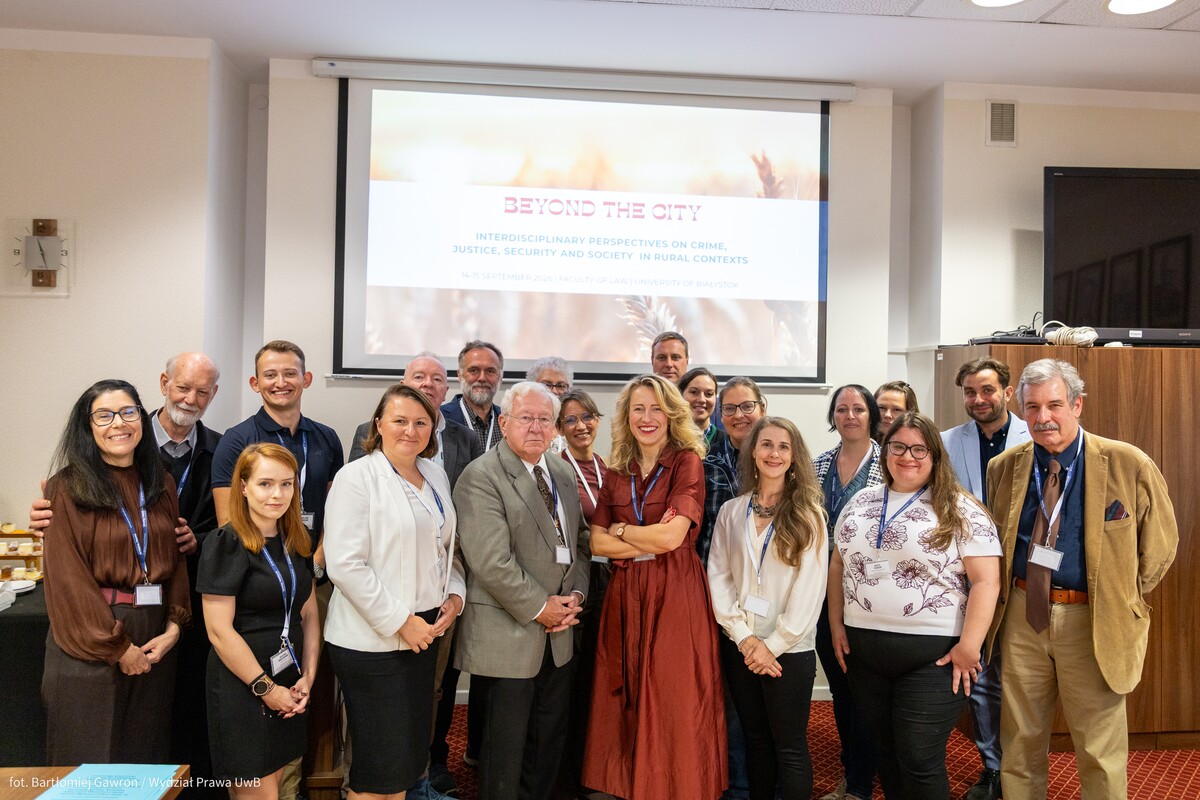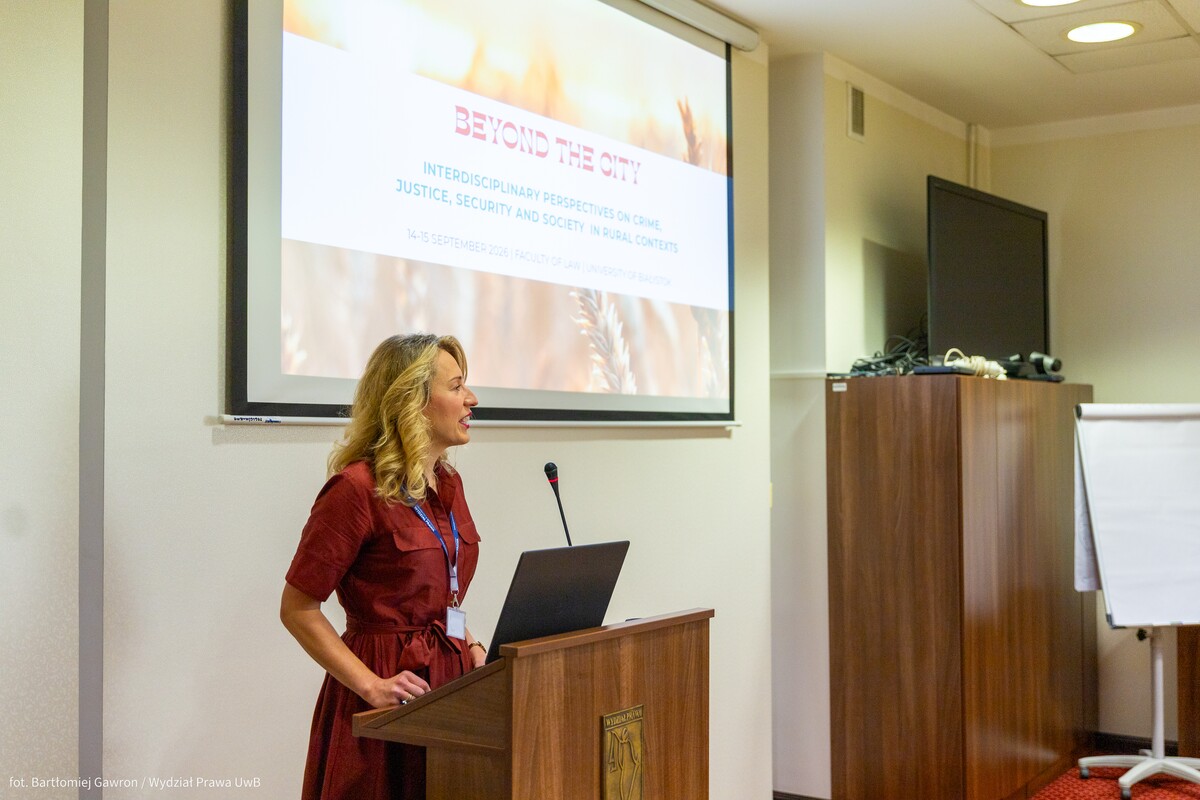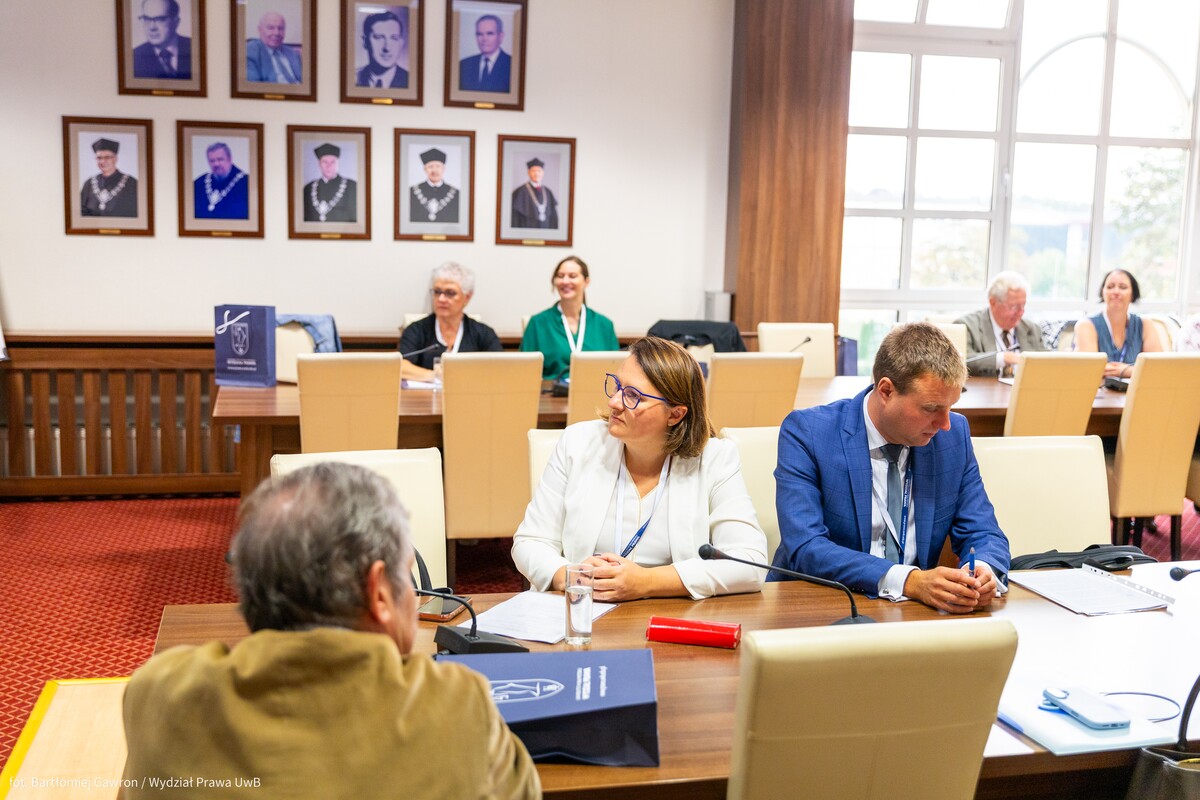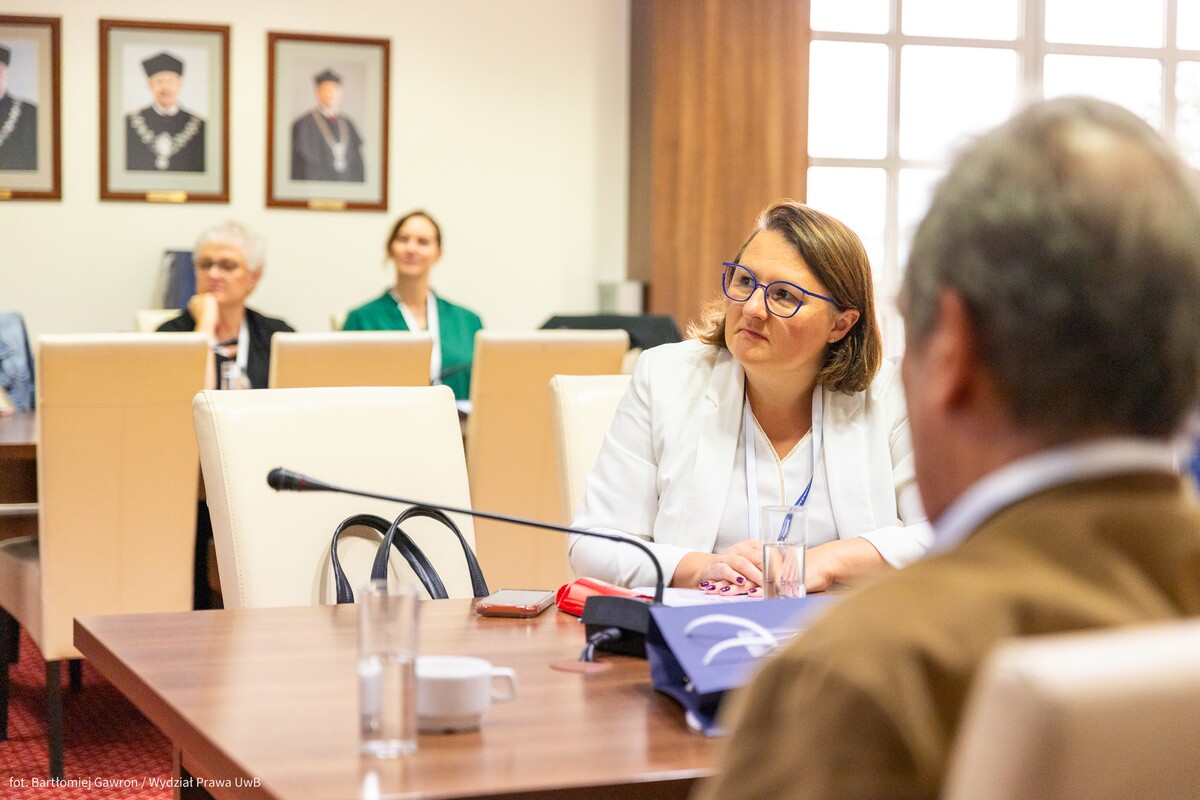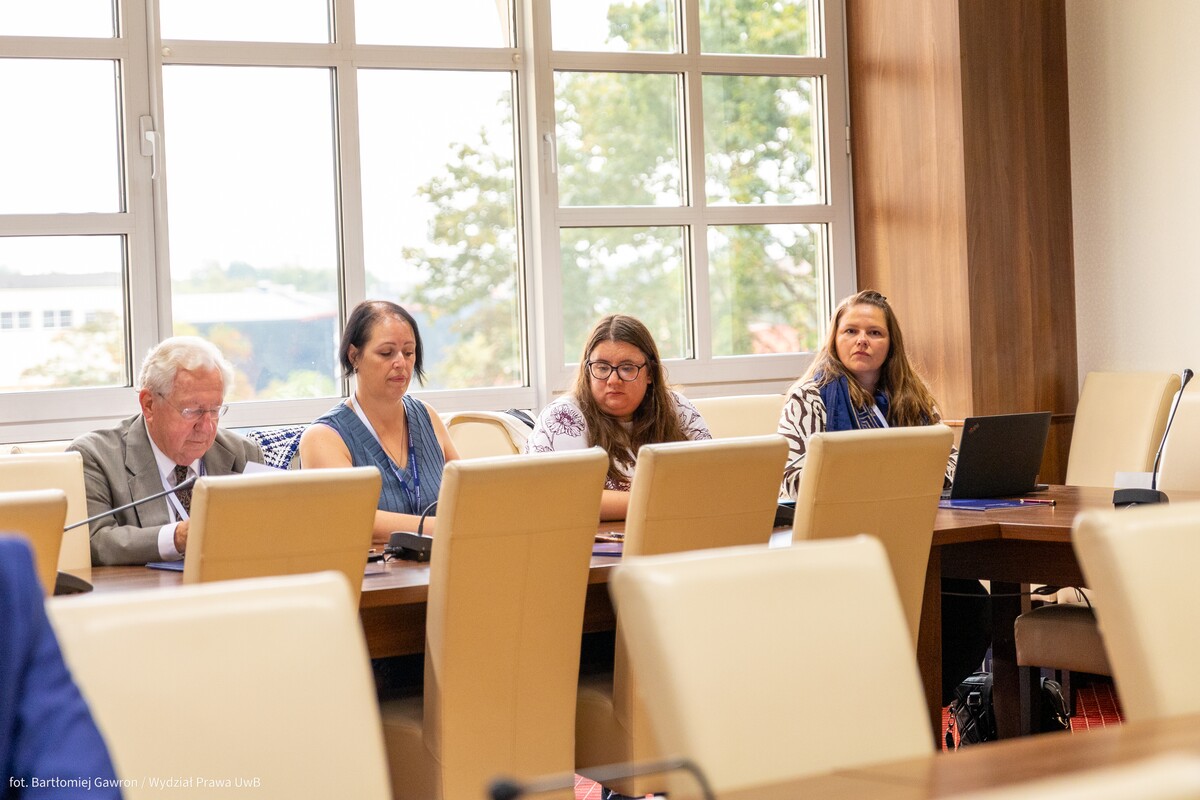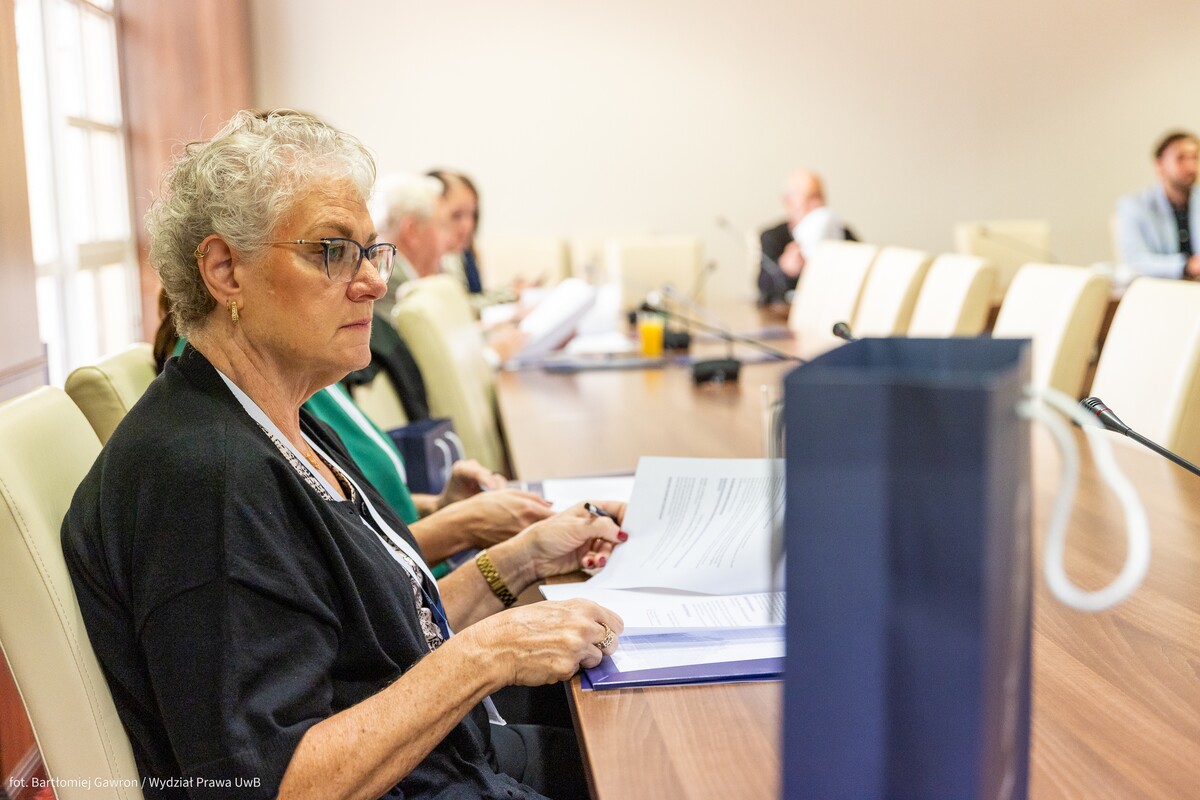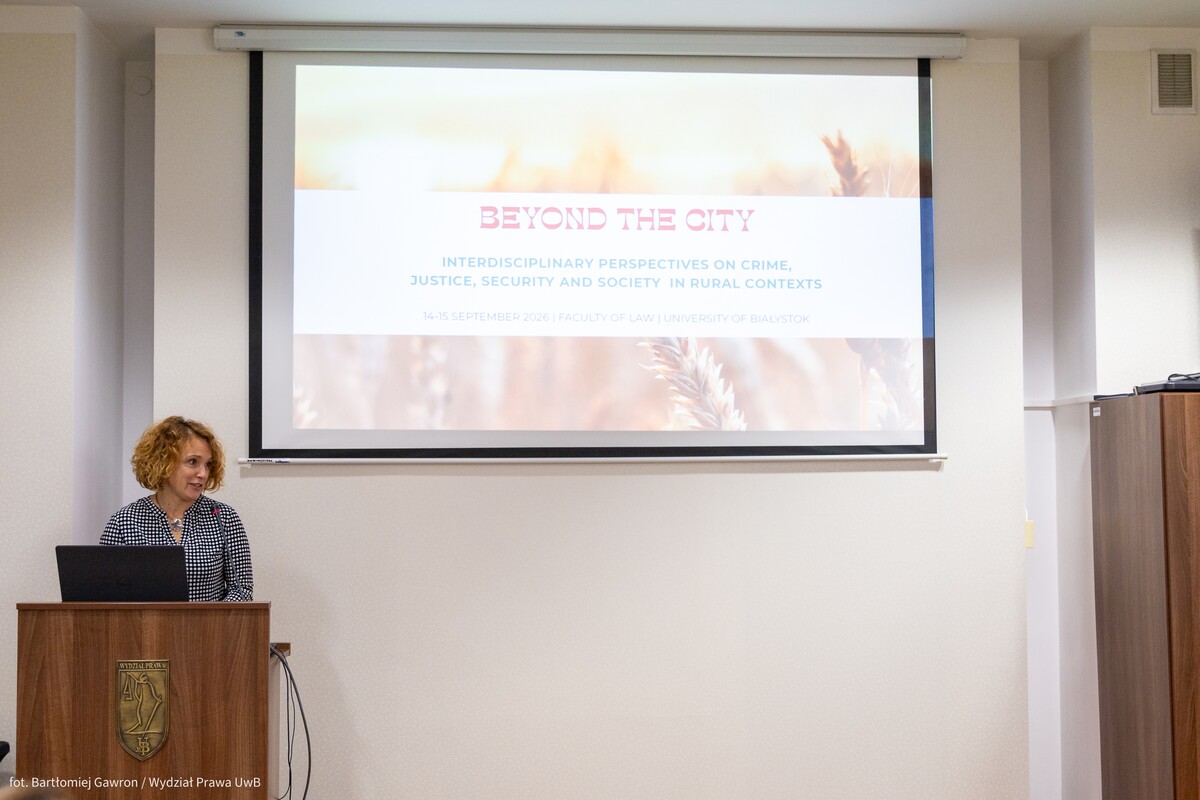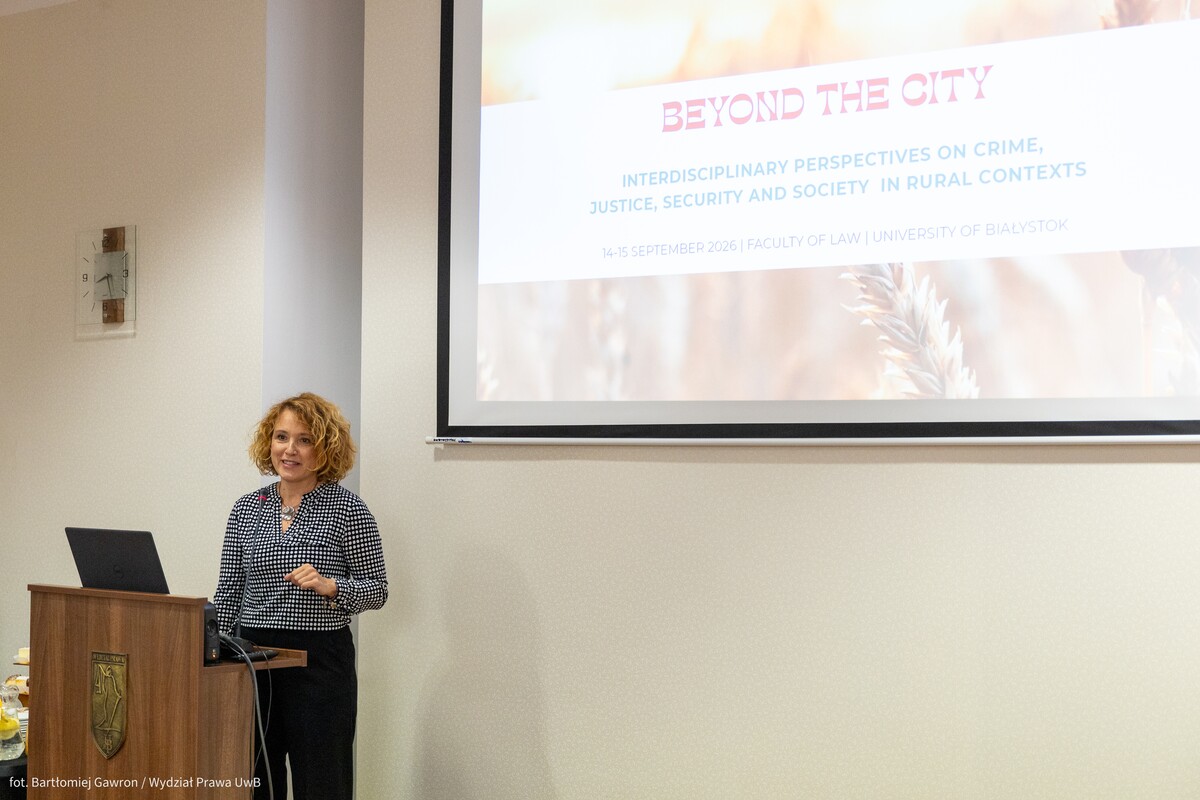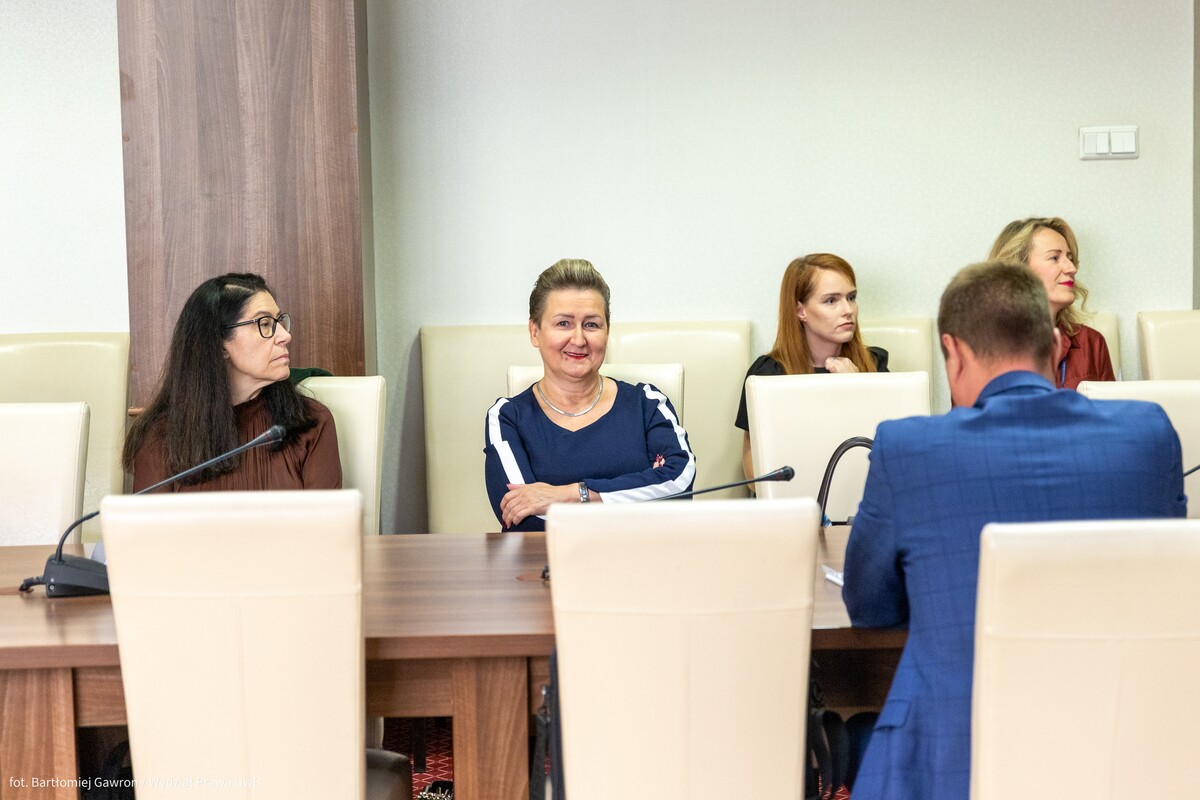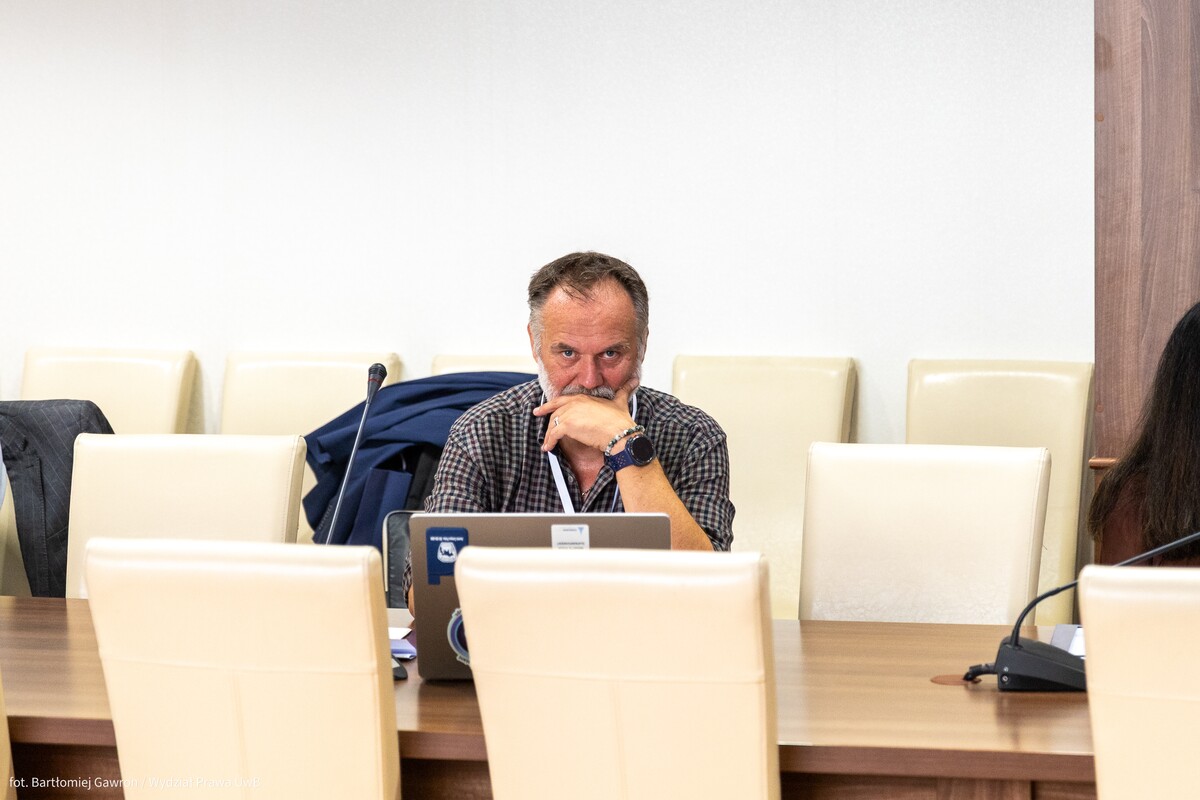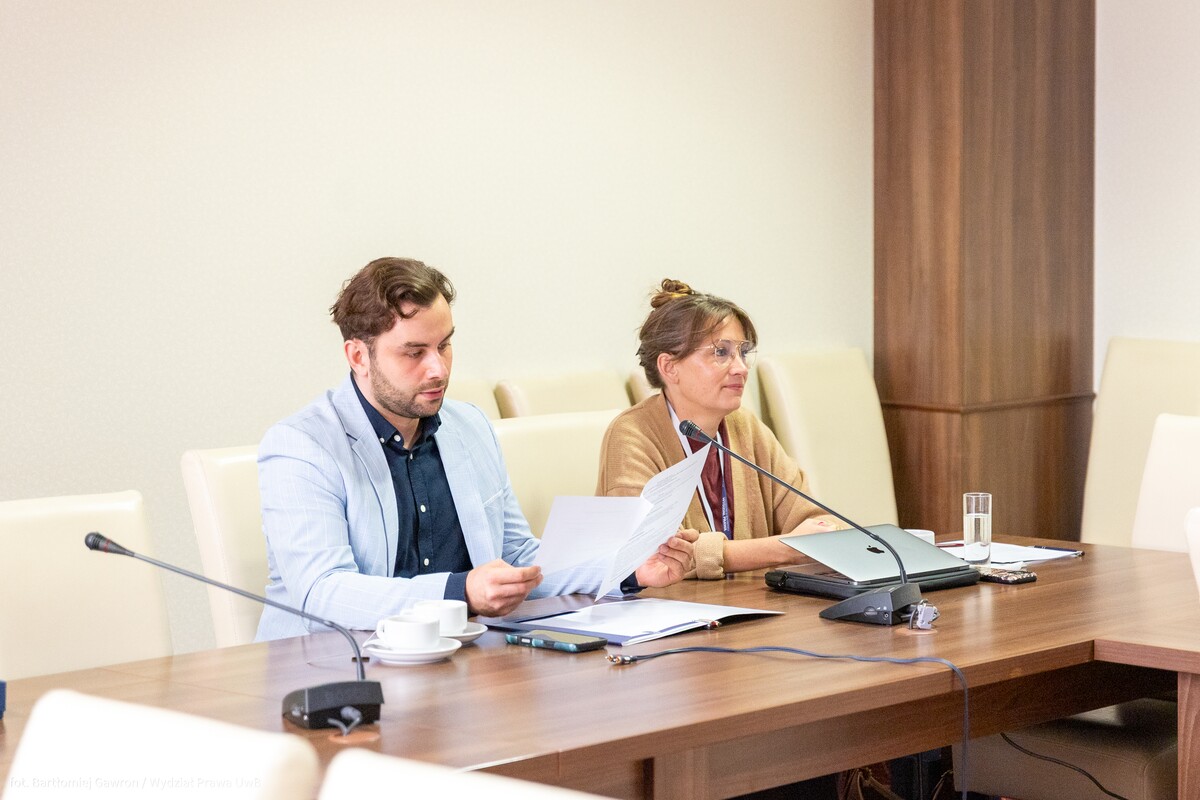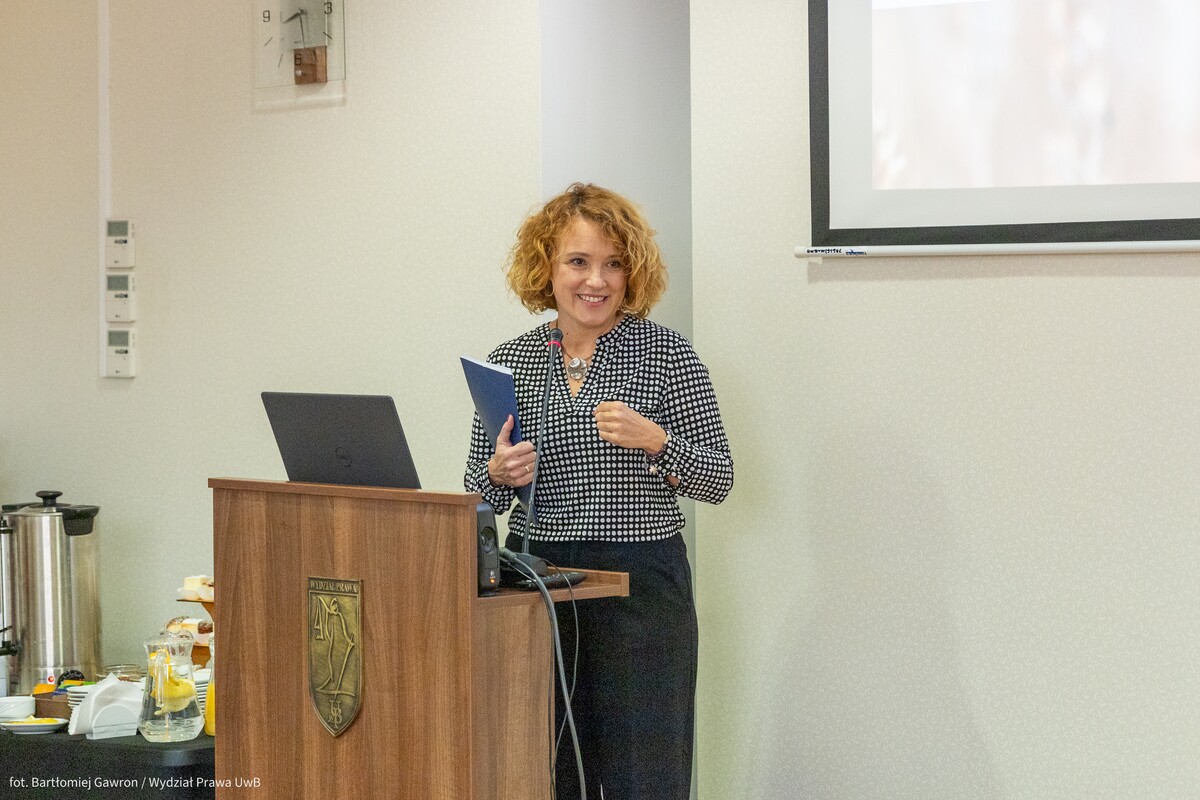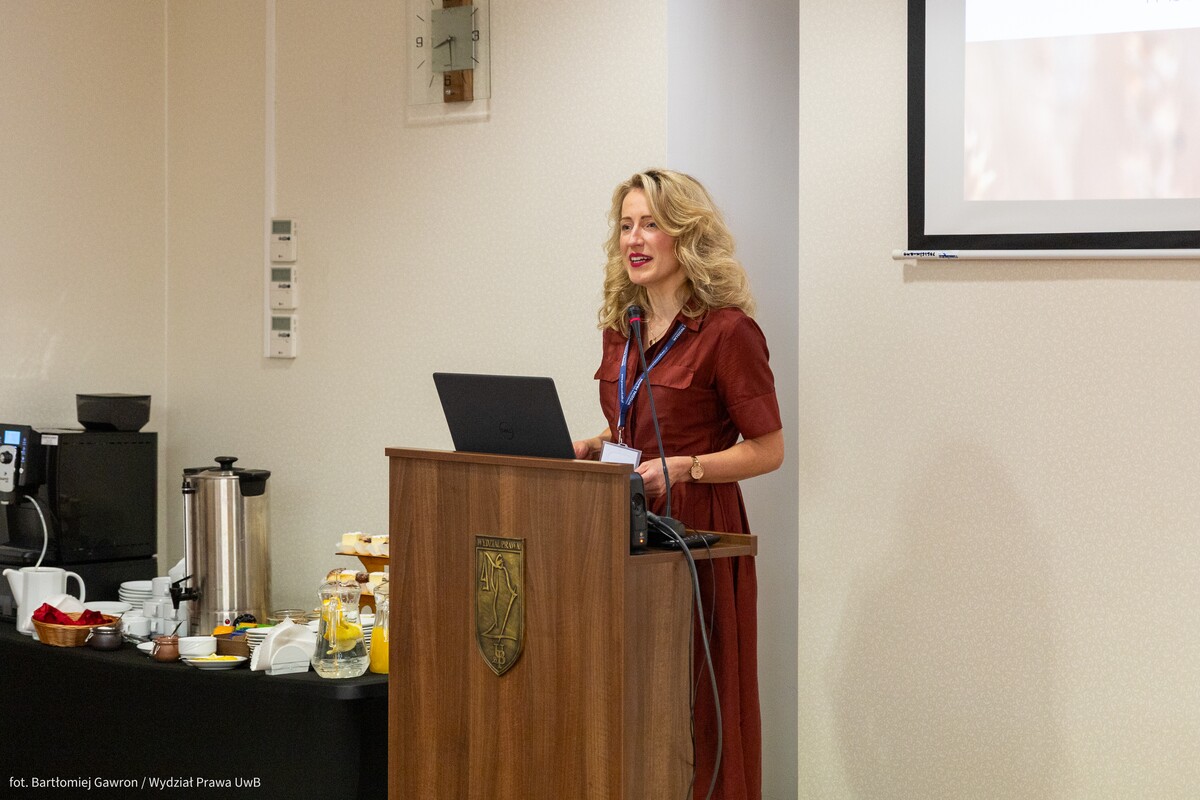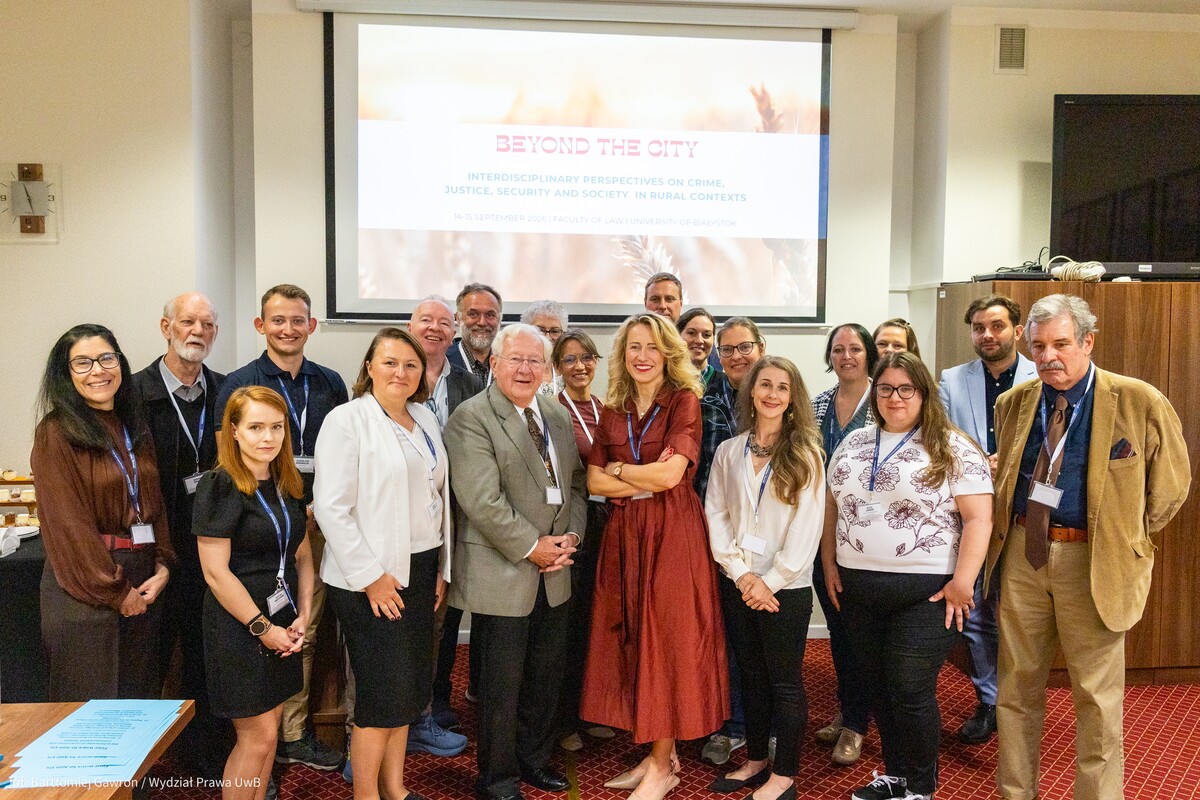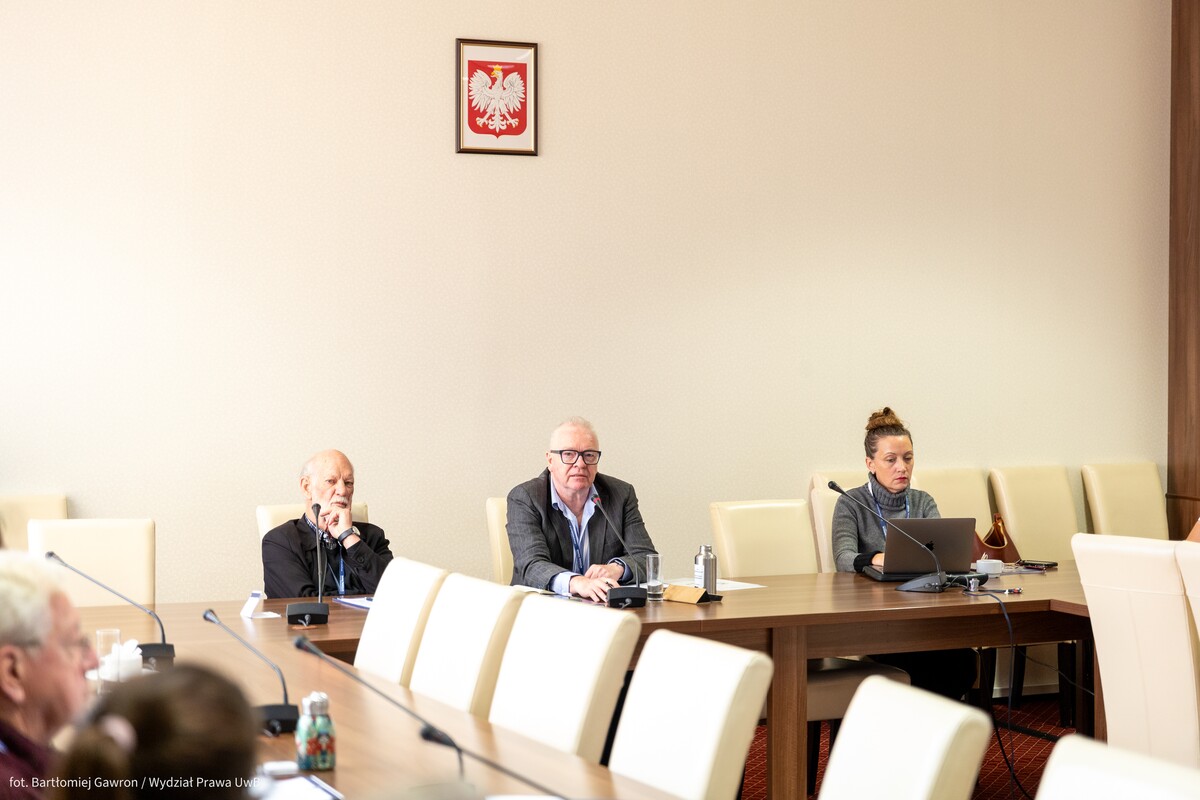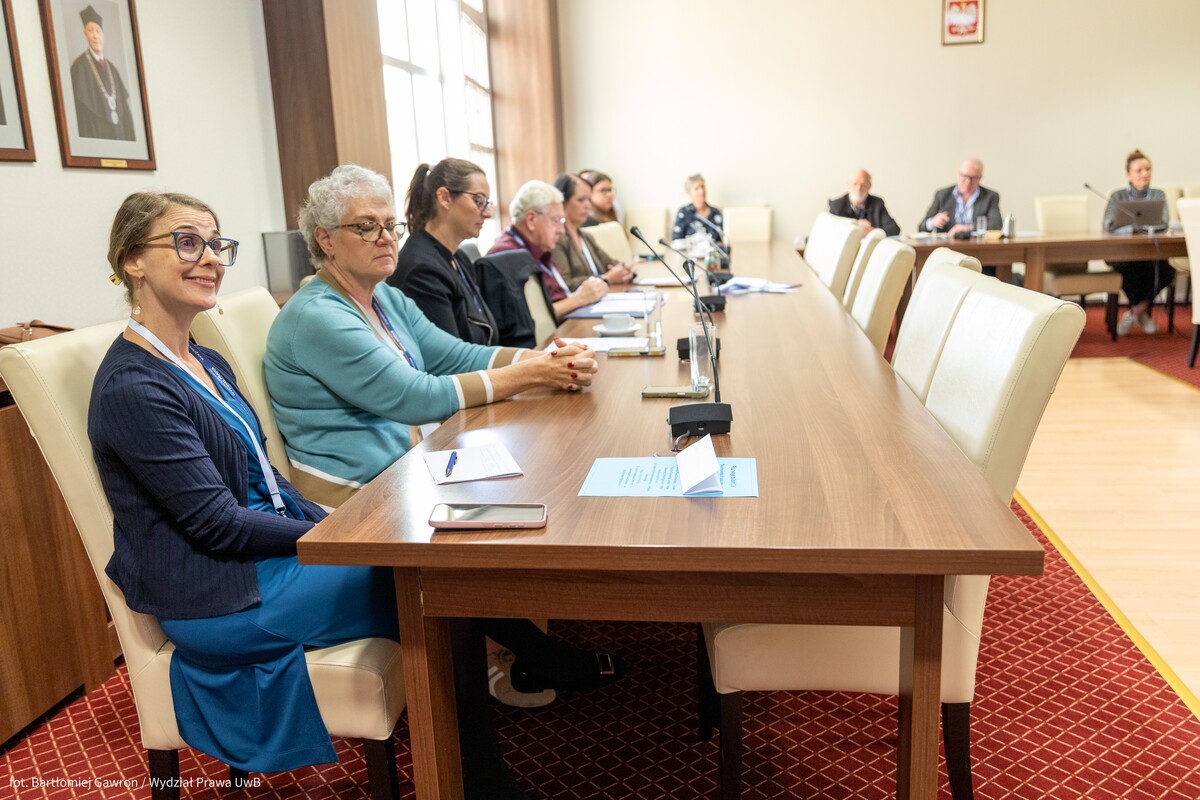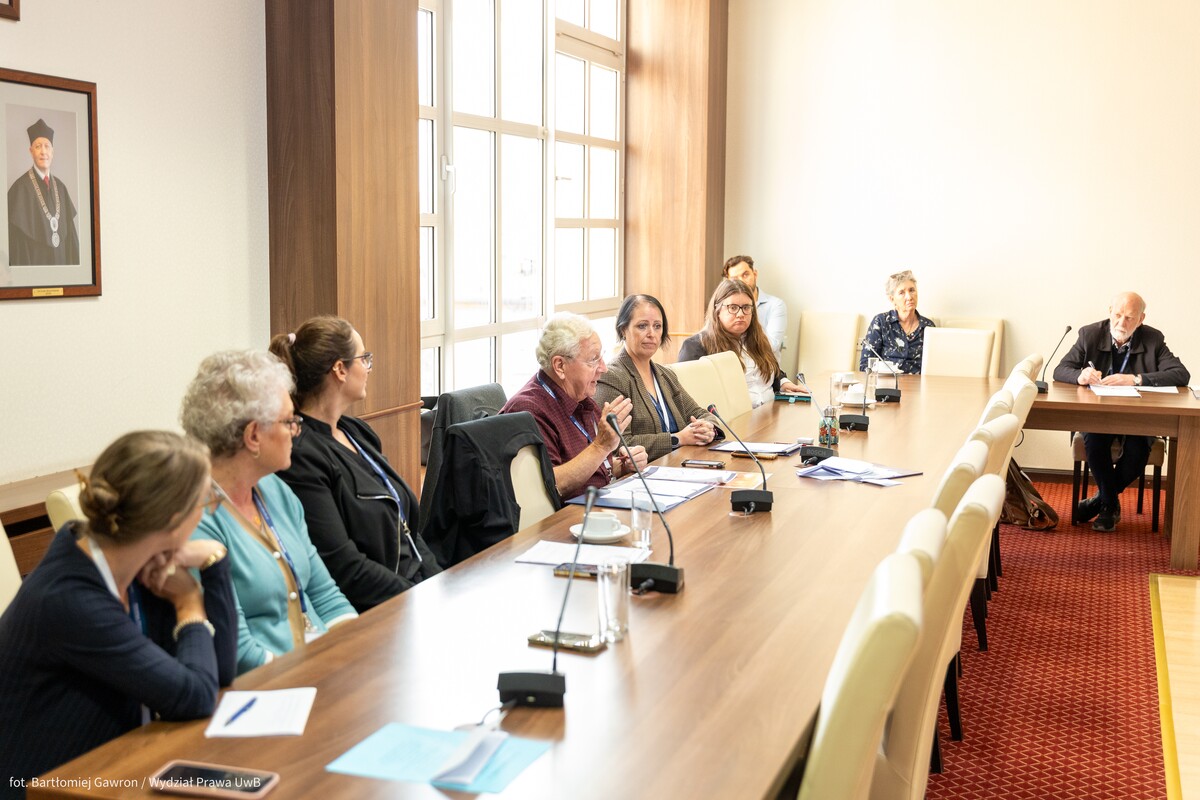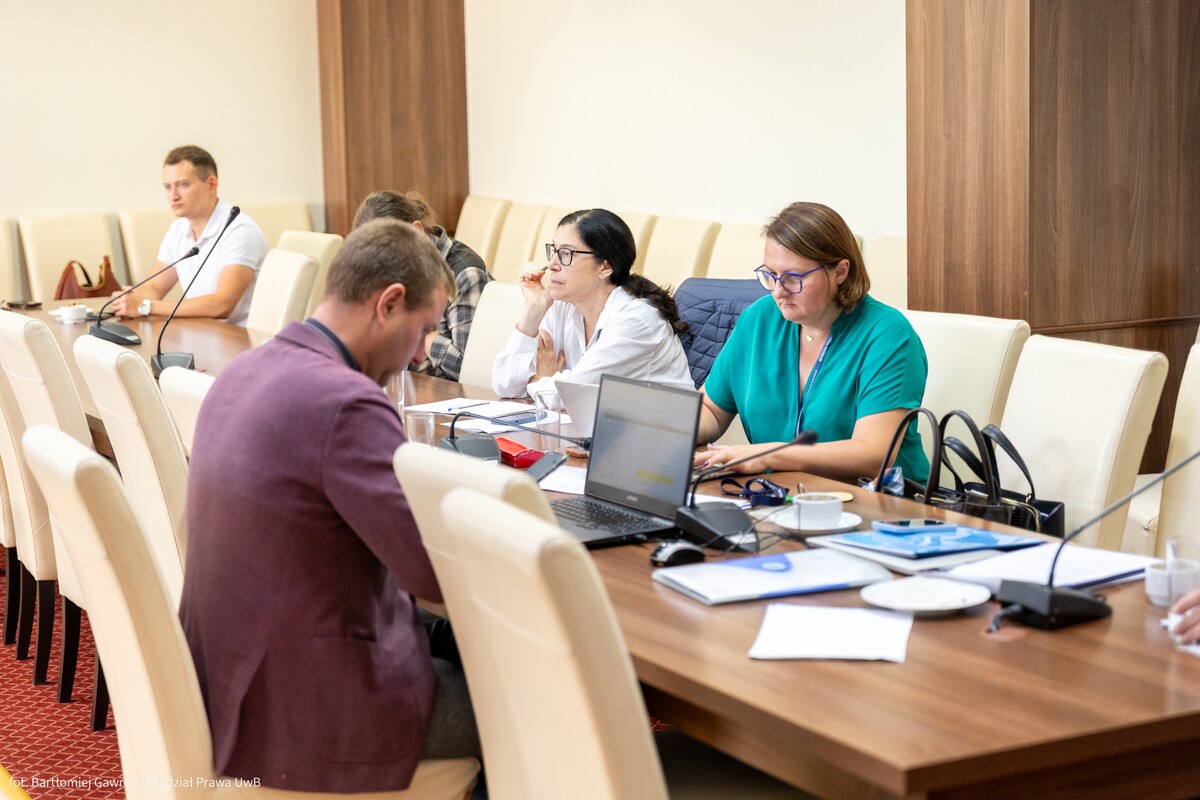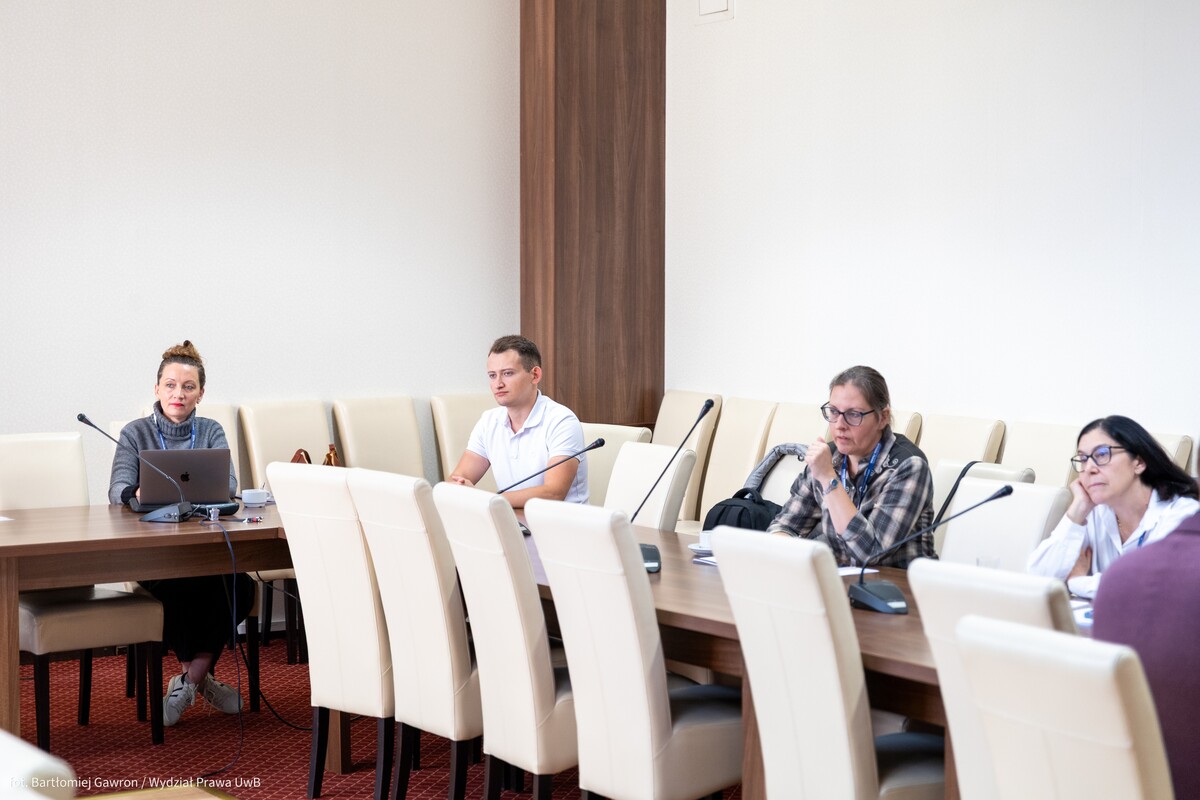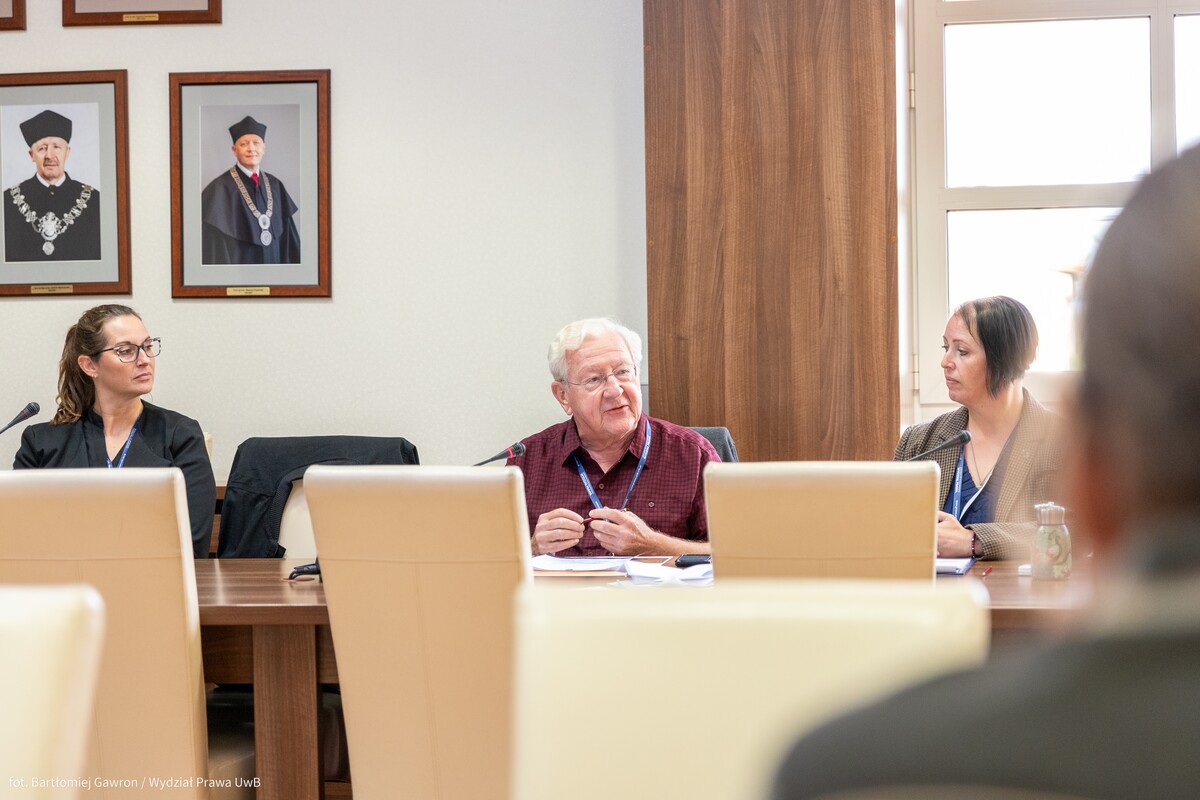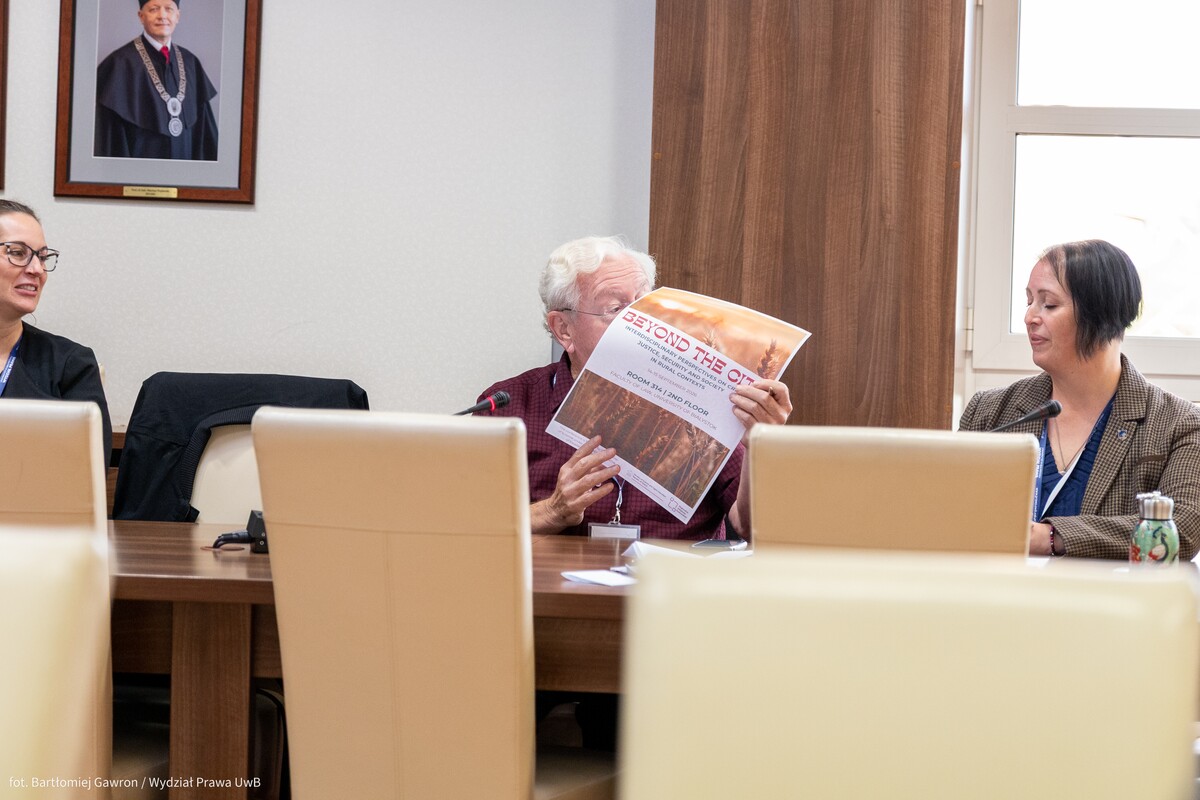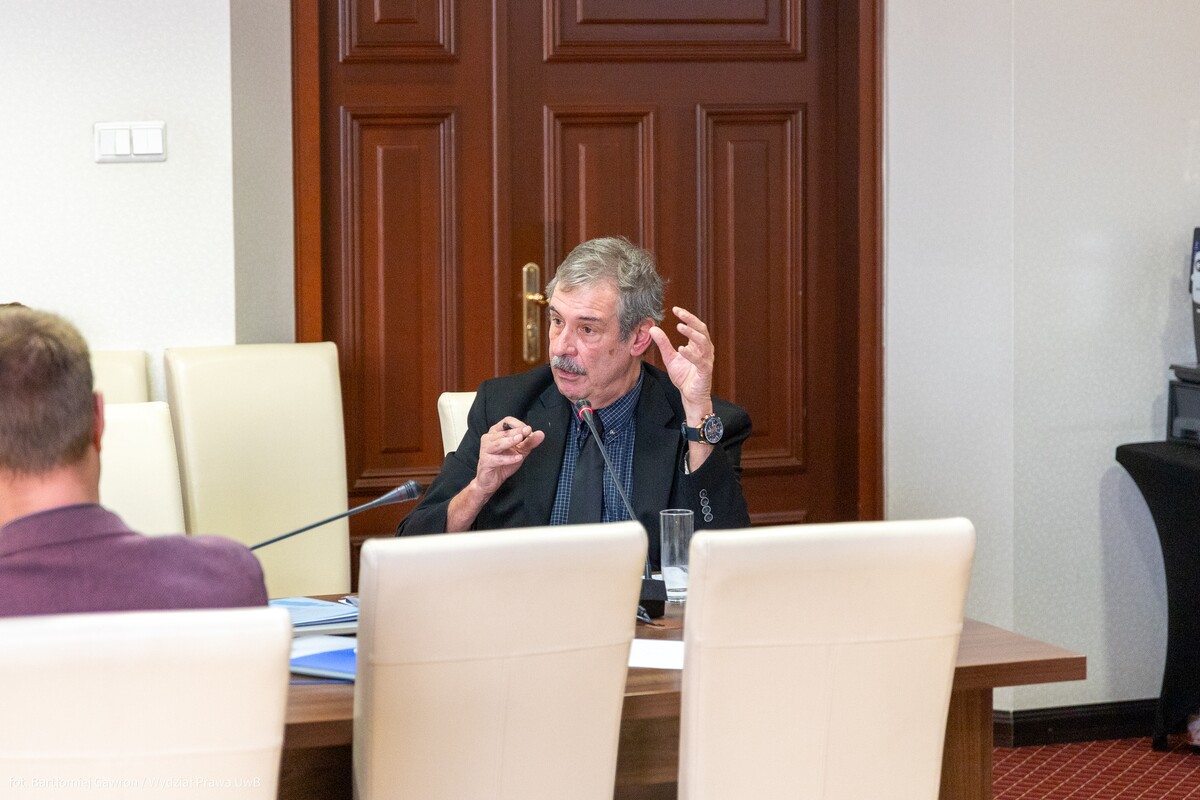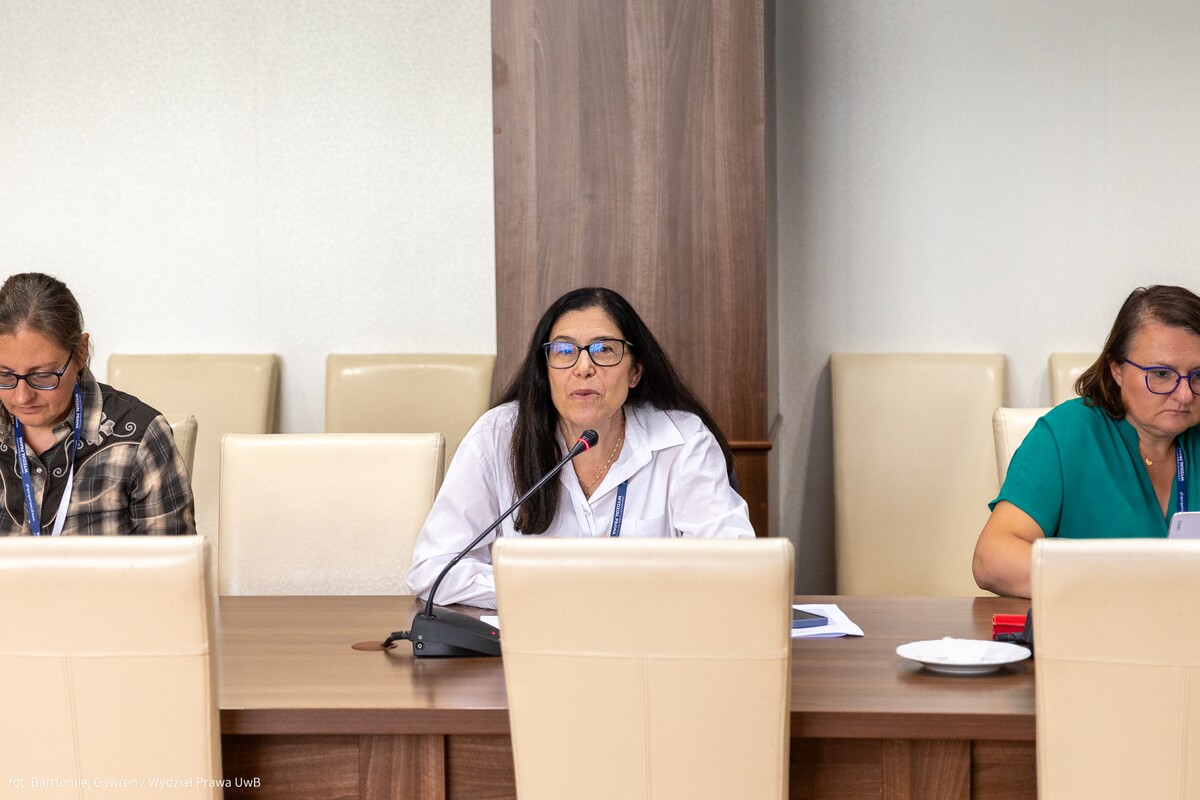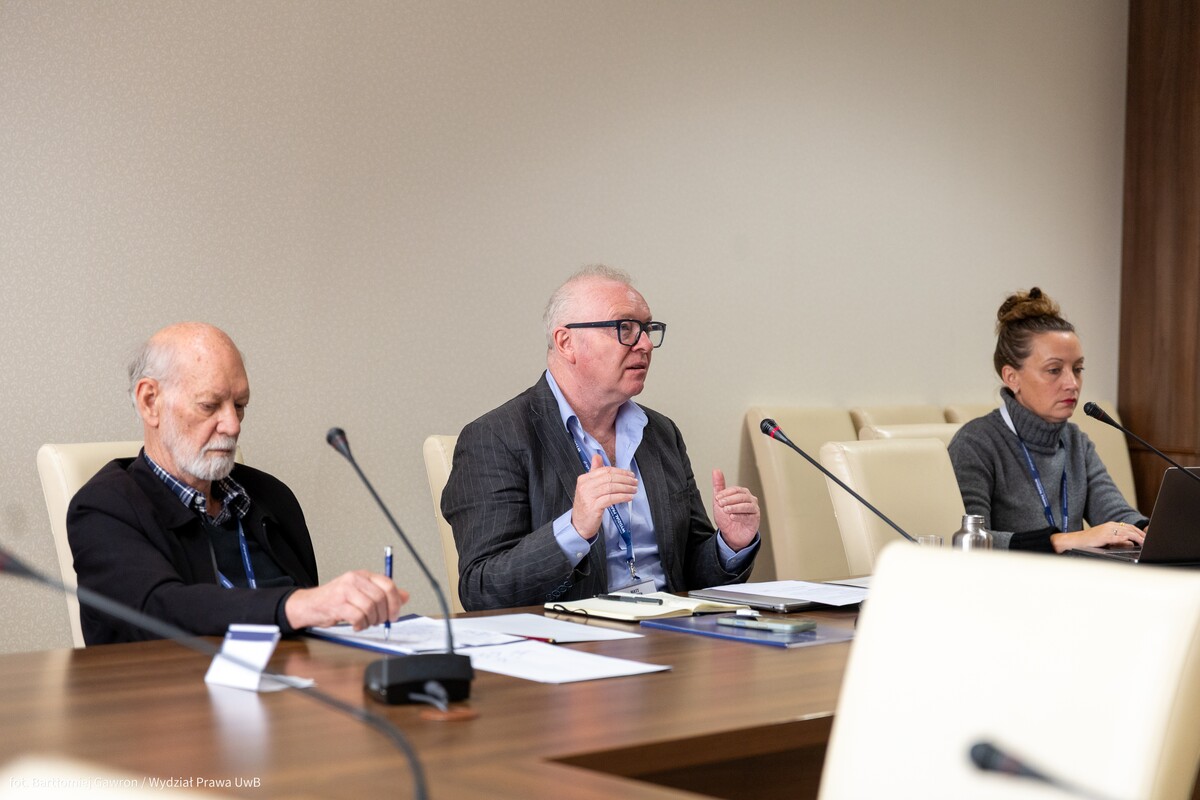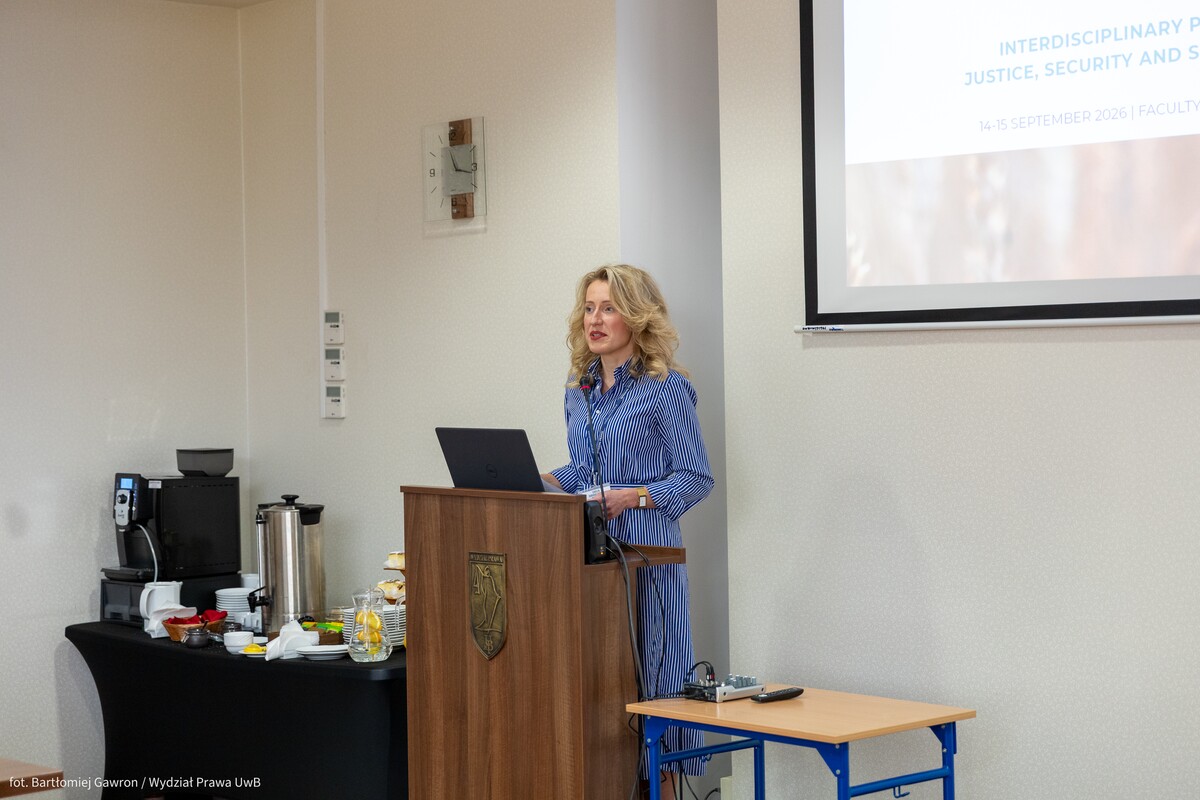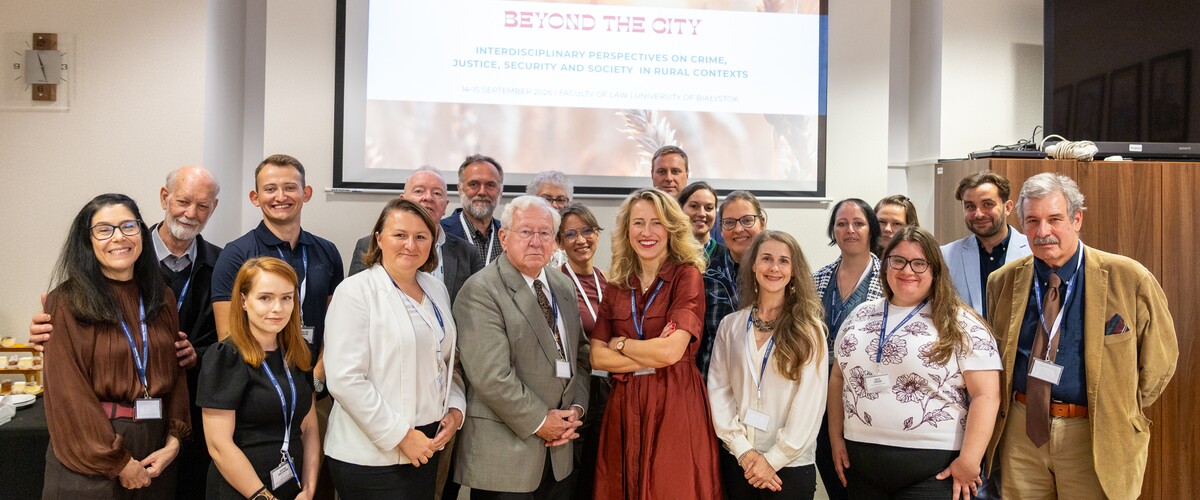
On 14–15 September 2026, the Faculty of Law of the University of Białystok hosted the international scientific conference “Beyond the City: Interdisciplinary Perspectives on Crime, Justice, Security and Society in Rural Contexts”. The conference was organised by the Department of Criminal Law and Criminology at the Faculty of Law, University of Białystok, and the organisation of the event was led by Dr Emilia Jurgielewicz-Delegacz. The Organising Committee also included Dr Magdalena Perkowska, Dr Justyna Omeljaniuk, and Ewelina Bielewska, a Faculty of Law student and conference volunteer. The conference was opened by Prof. Izabela Kraśnicka and Dr Emilia Jurgielewicz-Delegacz.
The conference focused on crime, justice, security, and society in rural contexts. The aim of the event was to create a space for discussion of the specific nature of crime and the functioning of the justice system beyond major urban centres, as well as the place of rural areas in contemporary criminological research. Particular attention was paid to rural crime, security and policing in rural areas, access to justice and legal protection, domestic and gender-based violence, social exclusion, organised crime and illicit markets, environmental crime, cybercrime, and the significance of place and space for the occurrence of crime and perceptions of safety and security.
The conference was international and interdisciplinary in character. It brought together researchers from Poland and international academic institutions, representing, among others, the United States, the United Kingdom, Ireland, Portugal, Sweden, Slovenia, South Africa, and New Zealand. The programme brought together criminological, legal, sociological, geographical, and social perspectives. The event also provided a forum for the exchange of experiences among researchers working on crime and security in rural areas in different parts of the world. It was a pioneering event in Poland – for the first time, researchers specialising in rural criminology from Poland and international academic institutions gathered in one place, creating an international space for the exchange of research findings, experiences, and perspectives on crime, security, and the functioning of rural communities.
A particularly important part of the programme consisted of presentations by invited keynote speakers. At the invitation of Dr Emilia Jurgielewicz-Delegacz, leading international researchers specialising in rural criminology came to Białystok and presented recent research findings, theoretical reflections, and experiences relating to the development of the subdiscipline in different countries. Prof. Joseph F. Donnermeyer of The Ohio State University presented “A Brief History of Rural Criminology: A Near Half Century of Progress”, addressing the history and development of rural criminology over almost five decades. Prof. Walter DeKeseredy of West Virginia University delivered “Challenges and Opportunities for International Rural Criminology”, focusing on the challenges and opportunities associated with the development of rural criminology internationally. Prof. Gorazd Meško of the University of Maribor presented “Rural Criminology in Europe”, addressing the development of rural criminology in Europe. Prof. Kreseda Smith of Harper Adams University presented “Policy and Policing Beyond the City: Rural Crime Policing in England and Wales”, addressing policy and policing in relation to rural crime in England and Wales. Prof. Vania Ceccato of KTH Royal Institute of Technology delivered “On Violence Across the Rural-Urban Continuum”, addressing violence from the perspective of the rural-urban continuum. Prof. Matt Bowden of Technological University Dublin presented “Social Space and the Relational Field: Introducing Bourdieu to Rural Criminology”, focusing on the use of Pierre Bourdieu’s concepts to analyse social space and relationships in rural contexts. Dr Jessica Peterson of the University of Canterbury, who participated in the conference online, presented “Lessons from the Field: Rural Research and Pedagogy”, addressing experiences of conducting research in rural areas and teaching. Prof. Susan Dewey of The University of Alabama presented “Building Solidarity through Science: Community-Based Participatory Research with Women in Rural Prisons”, focusing on participatory research conducted together with women incarcerated in rural prisons. Prof. Brittany VandeBerg presented “Situated Responsibilization: Women, Crime, and Criminal Justice in Rural Areas”, addressing women, crime, and criminal justice in rural communities.
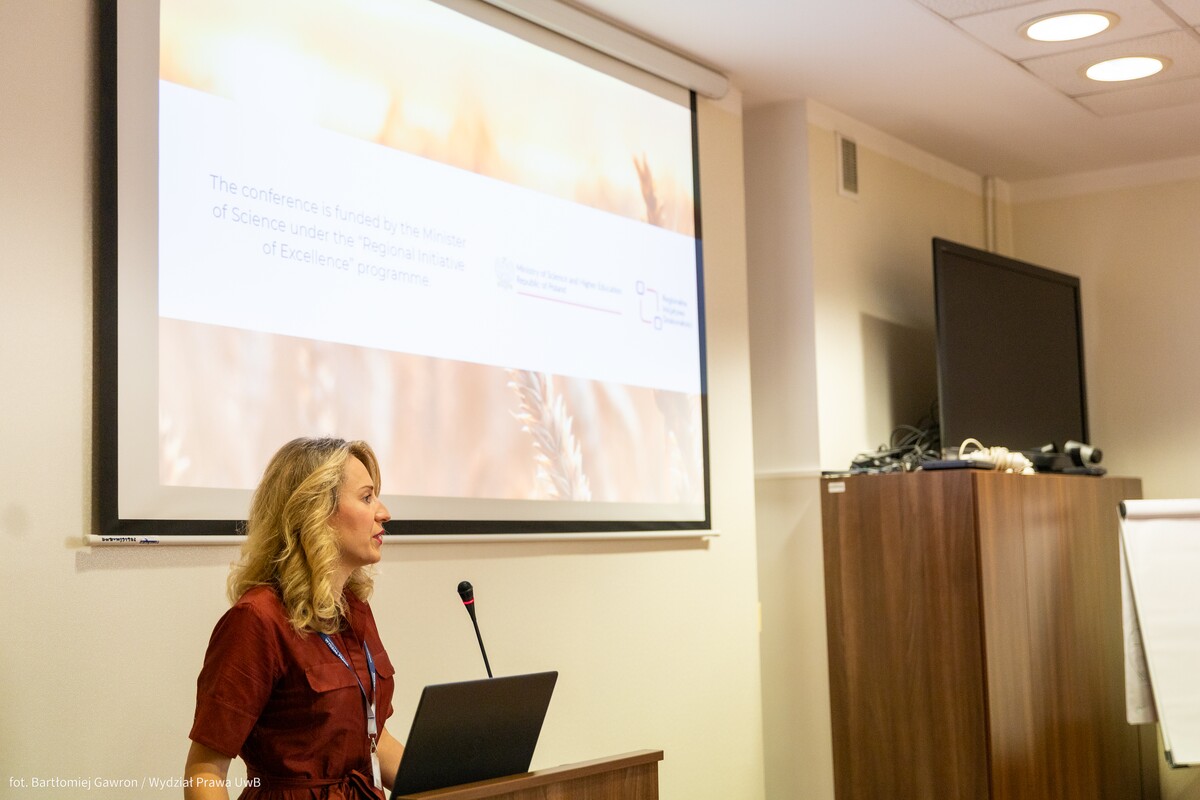
The keynote presentations therefore covered a broad spectrum of issues, from the history and development of rural criminology, through criminal justice policy and policing, to violence, social space, research methodology, pedagogy, and the situation of women within the justice system in rural areas. The participation of the invited keynote speakers was co-financed by the Minister of Science under the “Regional Initiative of Excellence” programme.
The conference also brought together other researchers from Poland and abroad. Julie Tennant-Caine presented a practitioner’s perspective on the functioning of the justice system in rural areas in “Rural Criminal Justice: A Practitioner's Perspective”. Mgr Tomasz Berdzik presented a legal and criminological analysis of animal abuse in rural areas, together with de lege ferenda proposals, in “Beyond the City, Beyond the Law? A Legal and Criminological Analysis of Animal Abuse in Rural Areas and De Lege Ferenda Postulates”. Patrícia Ferreira and Carla Sofia Cardoso, who participated in the conference online, presented research findings on fear of crime and attitudes towards the police in rural Portugal in “Fear of Crime and Attitudes Toward the Police: Evidence from Rural Portugal”. Dr Maciej Duda discussed tourist crime in rural areas using the Warmia and Mazury region as an example in “Tourist Crime in Rural Areas: The Example of the Warmia and Mazury Region”, while Dr Emilia Jurgielewicz-Delegacz presented research findings on the underreporting of crime in rural communities, conducted as part of the “Rural Crime in Poland” project, in “Underreporting Crime in Rural Communities: Evidence from the Rural Crime in Poland Project”.
In the following session, Prof. Anthony Minnaar addressed the use of advanced technologies to combat organised rhinoceros poaching in South Africa between 2012 and 2025 in “Using Advanced Technology to Combat the Organised Poaching of Rhinoceros in South Africa (2012–2025)”. Prof. Ilona Matysiak, on behalf of her co-authors Prof. Magdalena Grabowska and Dr Aleksandra Świderska, presented the findings of a nationwide study on gender-based violence against women living in rural areas of Poland in “Understanding Gender-Based Violence Against Women Living in Rural Poland: Insights from a National Study”. Mgr Agata Ziobroń addressed smart farming as an emerging target of rural cybercrime and the resulting challenges for Polish criminal law in “Smart Farming as an Emerging Target of Rural Cybercrime: Challenges for Polish Criminal Law”.
In the following part of the programme, Mgr Olgierd Lech Dobrowolski presented “Raiding as a Specific Type of Organized Crime in the Agricultural Sector of Ukraine”, addressing raiding as a specific type of organised crime in Ukraine’s agricultural sector. Prof. Danielle Jefferis presented “Embodied Sovereignty and the Irish Frontier”, addressing the issue of embodied sovereignty and the Irish borderland.
The conference programme thus covered a broad spectrum of issues, ranging from the history and development of rural criminology, through conventional forms of crime, violence, victimisation, and policing, to organised crime, poaching, cybercrime, new technologies, and theoretical approaches to place and space. An important element of the programme was also research on women and gender-based violence, as well as issues relating to the justice system in rural areas.
The conference provided an opportunity for the direct exchange of research findings and experiences among researchers working in rural criminology in different countries. Its international character facilitated the development of academic contacts and further research cooperation on crime, security, and the functioning of rural communities.